GAZA
First Battle of Gaza- 26th - 27th March 1917
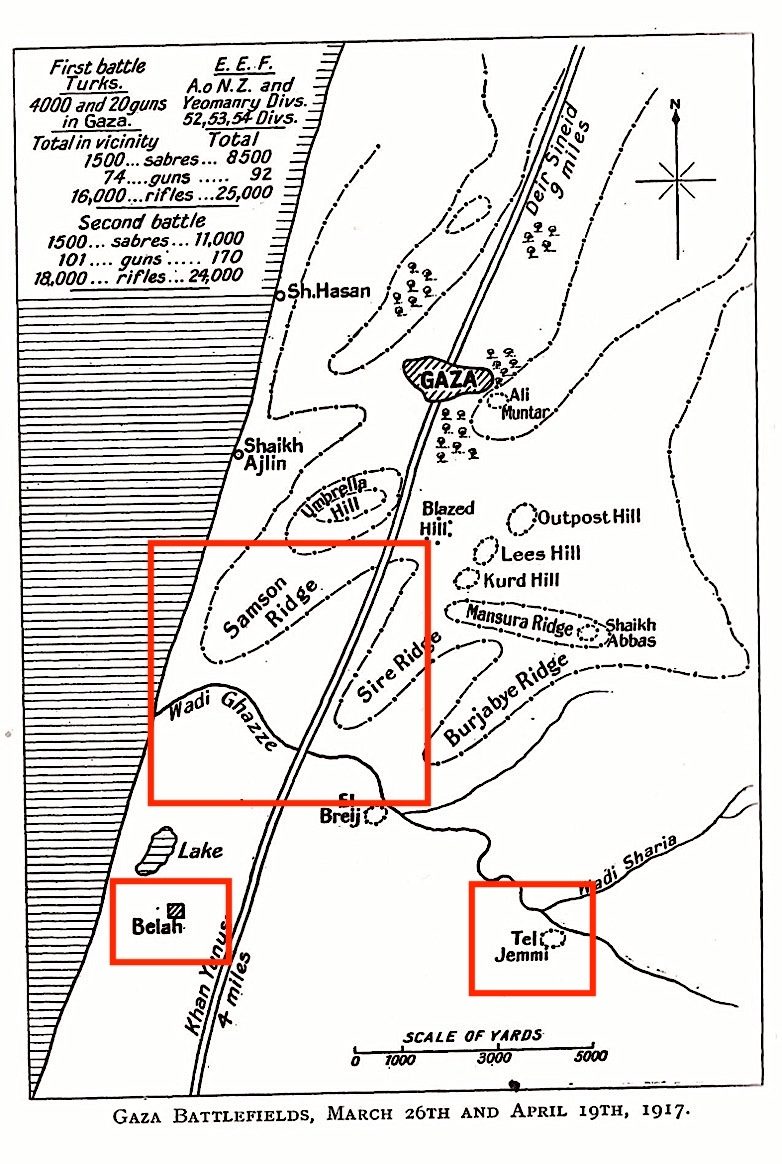
On the 25 March 1917 the Desert Column was concentrated at Belah, the 54th Division was at In Seirat, the 52nd Division at Khan Yunis and the Camel Corps and Armoured Batteries near Abbasan el Kebir.
The First Battle of Gaza commenced on the 26 March 1917. The main body of the enemy was stationed beyond the town, with detachments around the place and between there and Beersheba. The Anzac Mounted Division followed by the Imperial Mounted Division crossed the Wadi Ghuzze about, 6am, but their progress was seriously delayed by dense fog until 8am.
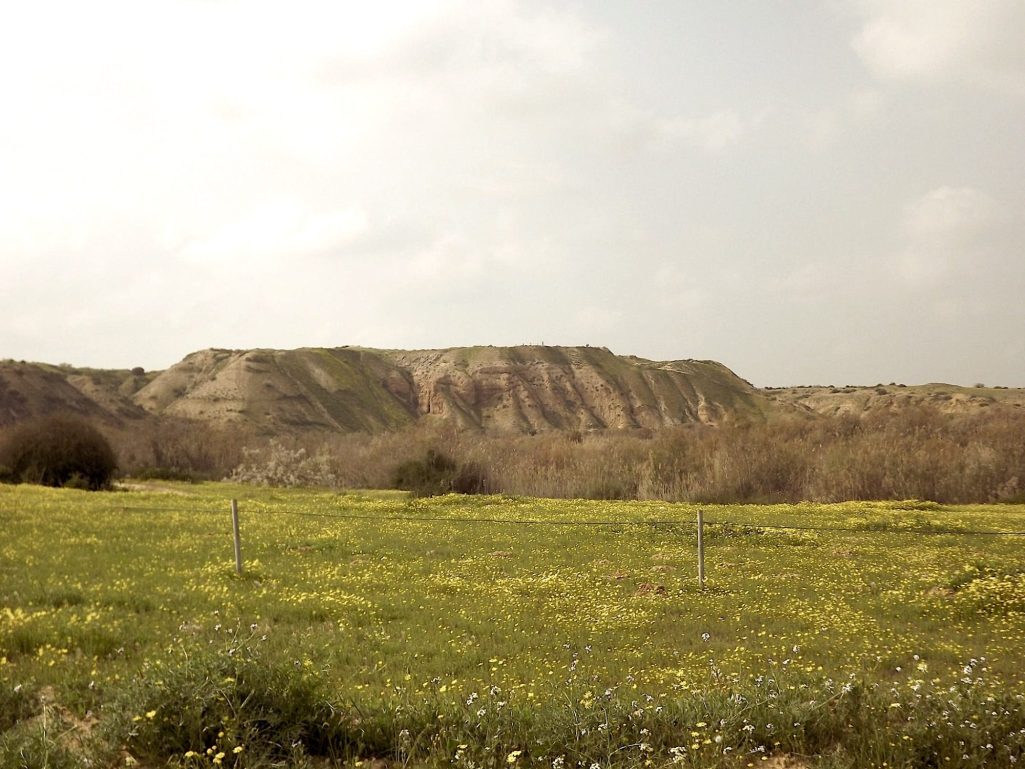
Tel el Fara, Wadi Ghazee
The account of the action can be read in ADDERLEY’s ‘The Warwickshire Yeomanry in the Great War,’ ‘by the end of the day the whole of the Ali Muntar position had been carried. When darkness fell the enemy had suffered heavy losses; but their Relief Columns were moving up from the N.E. and S.E., the majority of the mounted troops had been unable to water their horses’, and it was therefore necessary to withdraw during the night to the west bank of the Wadi Ghuzze in order to water the horses
Copyright
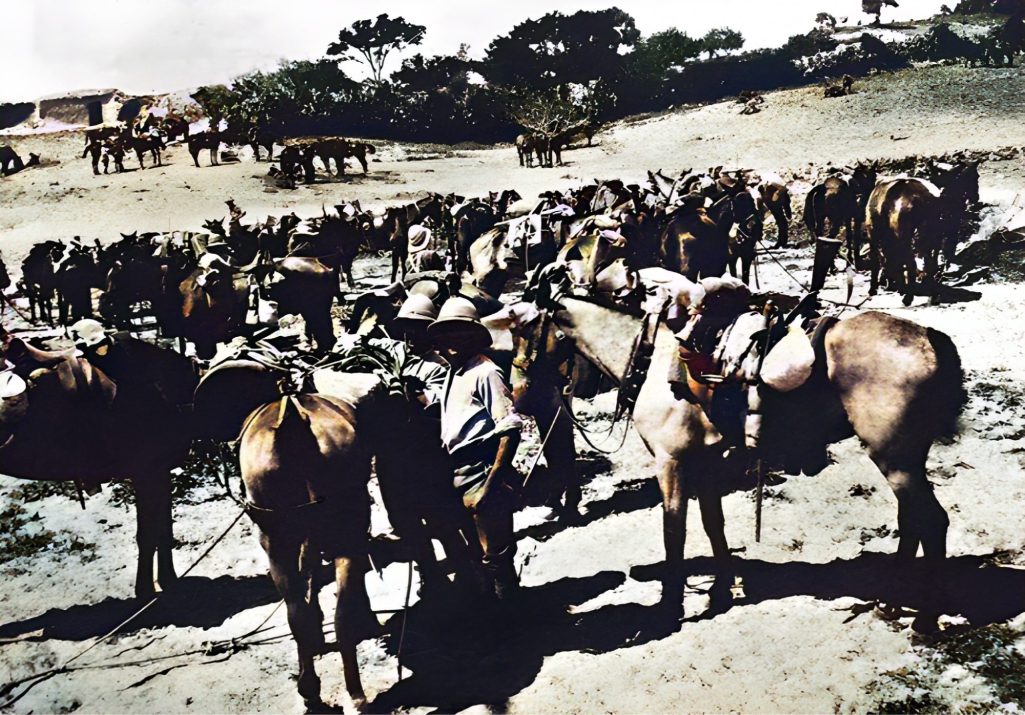
1/1st Warwickshire Yeomanry - First Halt in Palestine at the the Wadi Ghuzee near Tel el Jemmi. ‘The Brigade halted at the foot of the mound and patrols were sent out across the wadi to reconnoitre from the top of a ridge some half a mile on the far side.’
On the 25 March after Crossing the Wadi Ghuzze, the Warwickshire Yeomanry took up
positions on the Gaza- Beersheba Road at Hill 4727 with the intention of preventing
enemy reinforcements reaching Gaza from Sharia or Beersheba.
At 2.30am on 26 March they advanced in complete darkness, taking up positions some nine miles S.E. of Gaza. where they came within range of an enemy 5.7 gun which inflicted several casualties. Just before darkness fell on the 26 March reports came in of ‘large
numbers of Turkish reinforcements in column on the Gaza-Beersheba Road, a ridge was
immediately manned and fire opened with machine guns at 2,400 yards, to which the
enemy replied. The Regiment then withdrew to a previously reconnoitred position and then received orders to take up an outpost line but at 2am on the 27 March 1917, they
withdrew back to the west bank of the Wadi Ghuzze and by 7am they had returned to Belah.
The First Battle of Gaza resulted in the capture of 950 Turkish & German prisoners and two Austrian field guns; the enemy suffered some 8,000 casualties compared with 4,000 British casualties.
2987 Pte Cady HOYTE 1/1st Warwickshire Yeomanry records in his diary {1}
‘Early in March 1917 we moved up to Rafa and the welcome green slopes of that part of Palestine. From the fact that the tents and all superfluous equipment had been left behind, we knew that the immediate future was going to bring activity again.’
The Warwickshire Yeomanry instructions were’ to reconnoitre the enemy positions around Gaza, which lay some eight or nine miles away’ and ‘to head for a very high horseshoe shaped mound which could be seen dimly in the far distance.' The mound was situated on the side of a very deep and wide wadi – the Wadi Ghuzee near Tel el Jemmi.
‘The Brigade halted at the foot of the mound and patrols were sent out across the wadi to reconnoitre from the top of a ridge some half a mile on the far side.’
See supporting pictures above of both the mound and the 1/1st Warwickshire Yeomanry’s first halt in Palestine below this mound.
Observation
{1} ‘Farewell to the Horses’ by Robert ELVESTONE published in 2014.
2nd Battle of Gaza
Lead up to Second Battle of Gaza
Following the events of 26 & 27 March 1917 the whole Division remained at Belah with the Mounted Brigade, which included the Warwickshire Yeomanry being deployed on outpost duty guarding the right flank.
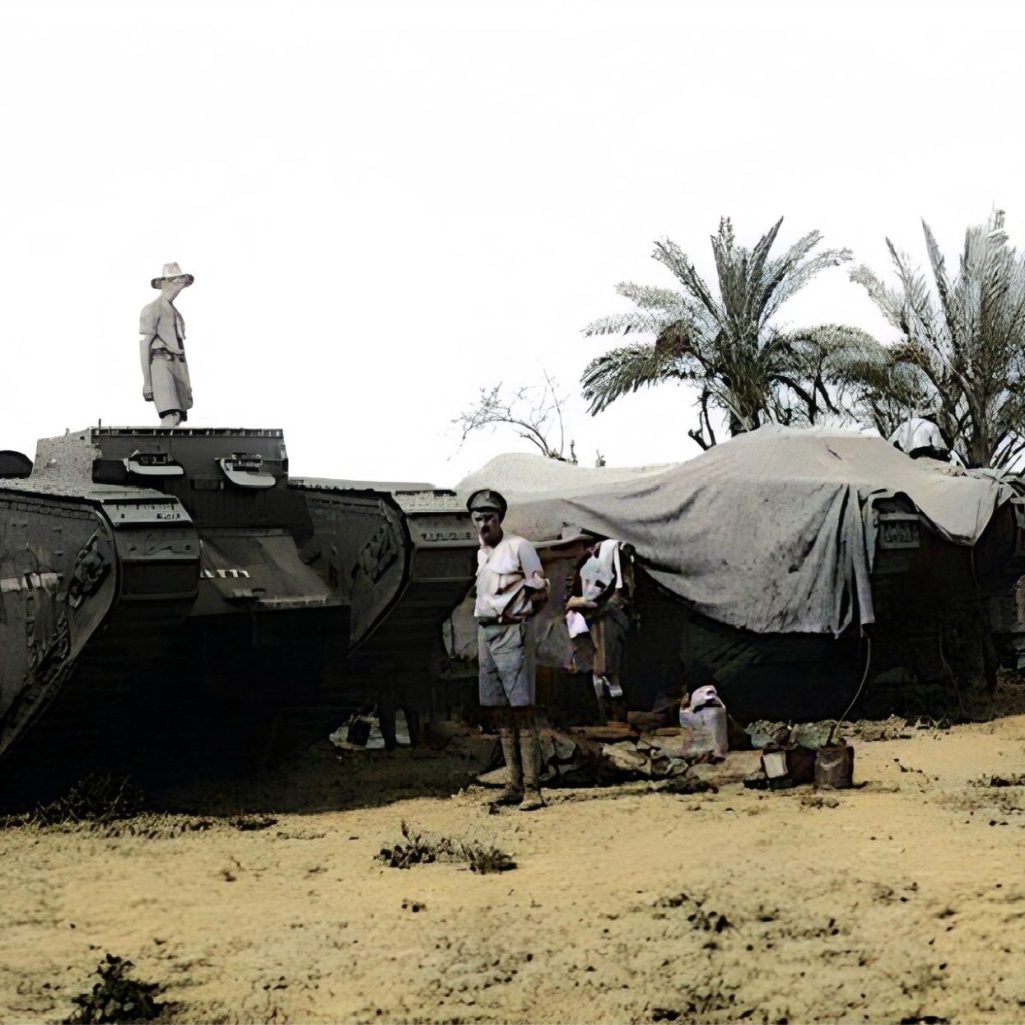
The enemy showed no signs of attack, and in the meantime, reinforcements were brought up, including eight tanks, in preparation for the second Battle of Gaza. On the 17 April operations commenced with an advance of the Wadi Ghuzze (spelt Wadi Ghazze on enclosed map) about five miles east of Gaza.
The Mounted Brigade reached Jemmi on the evening of that day and in the early morning on the 18th took up a defensive line to protect the Infantry attacking Shaik Abbas. This was taken without any difficulty although one of the tanks was put out of action, and two others hit and burnt. The Mounted Brigade was relieved in the evening of the 18th and returned to Jemmi.
Copyright
Tanks under canvas at Belah prior to Second Battle of Gaza April 1917
Second Battle of Gaza – 19 April 1917.
The Mounted Brigade reached Jemmi on the evening of the 17th April and in the early morning on the 18th took up a defensive line to protect the Infantry attacking Sheik Abbas. The Mounted Brigade was relieved in the evening of the 18th and returned to Jemmi.
The next day the Mounted Brigade again advanced to the Wadi Baha and took part in the attack on Attawwineh Ridge, southeast of Sheik Abbas. On reaching the ridge the Brigade dismounted and attacked the ridge on foot.
The heaviest fire of the enemy had begun about mid-day on the 19th and until then the Warwickshire Yeomanry had been slowly advancing without serious loss.
Meanwhile the final attack had begun along the whole line with the bombardment of Ali Muntar, the guns of two British Monitors and a French Battleship co-operating from the sea.
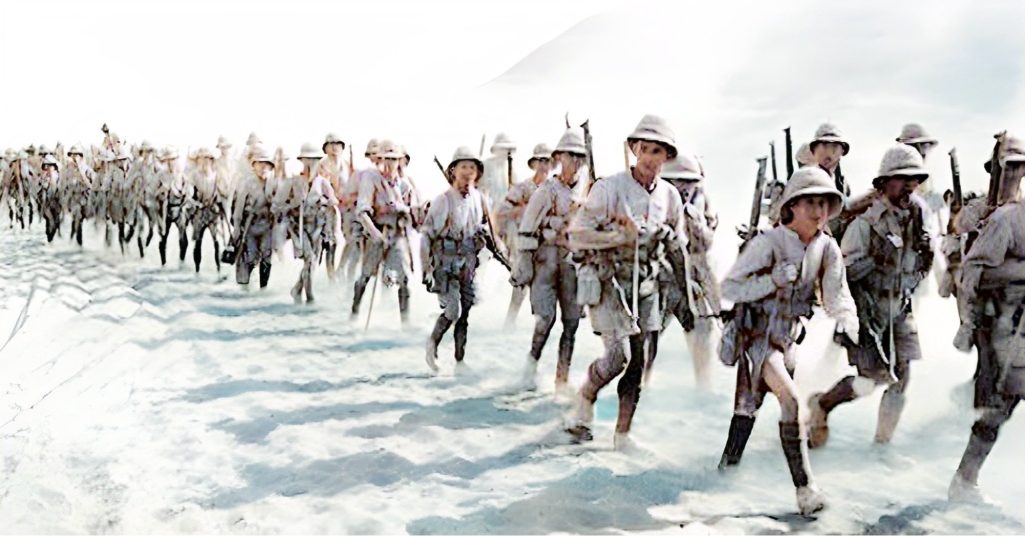
Photo Courtesy http://www.hertsatwar.co.uk/
On the 19th as darkness came on the Warwickshire Yeomanry withdrew by Squadrons as slowly and quietly as possible.’ We had to creep on our stomachs, but it was a big relief to drop over the top into the shelter of the little nullah.’
‘Casualties in the Regiment amounted to about 33 of which ‘B Squadron had two officers wounded and 20 men killed or wounded, being a third of the number that left Magum that morning’
‘Though certain ridges were captured around Gaza, the day was another failure with the British Forces suffering some 12,000 casualties.’
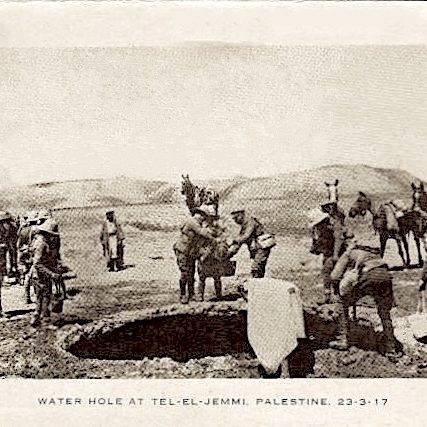
Warwickshire Yeomanry at Water Hole at Tel-el-Jemmi, Palestine 1917. This image can be found in The Warwickshire Yeomanry Christmas Card for 1917.
The Warwickshire Yeomanry reached their camp at Mendur about 2am on the 20th April 1917. Position warfare then commenced from Tel el Jemmi to the sea.
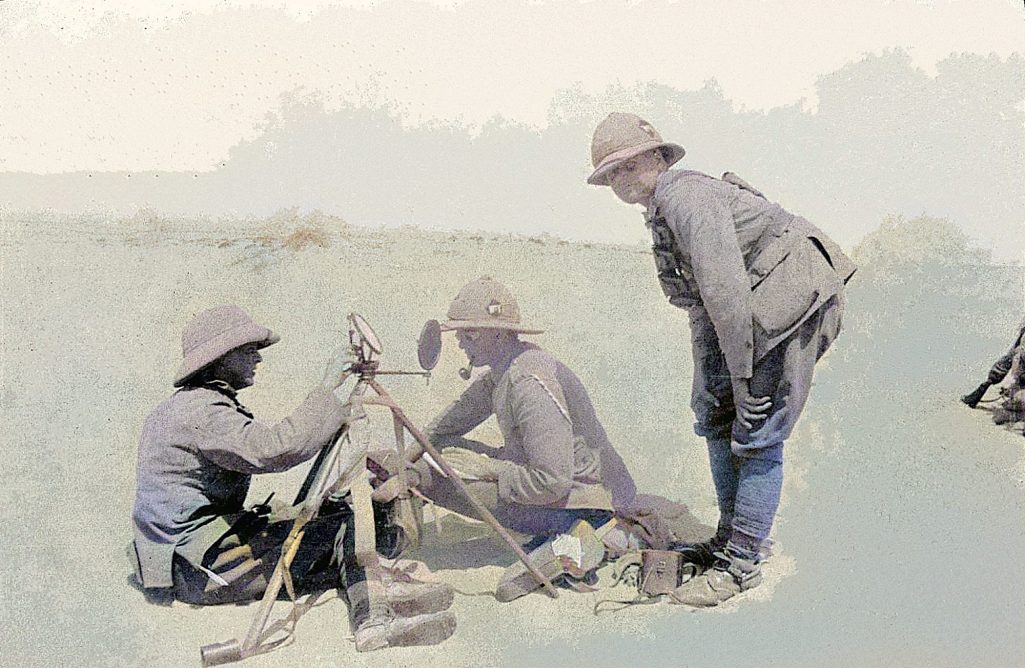
Below is a picture of three Warwickshire Yeomanry Signallers with a Heliograph - a message handling facility using the power of the sun to send messages in morse code. We have a Heliograph on display in the Museum.